Physical Address
304 North Cardinal St.
Dorchester Center, MA 02124
Physical Address
304 North Cardinal St.
Dorchester Center, MA 02124

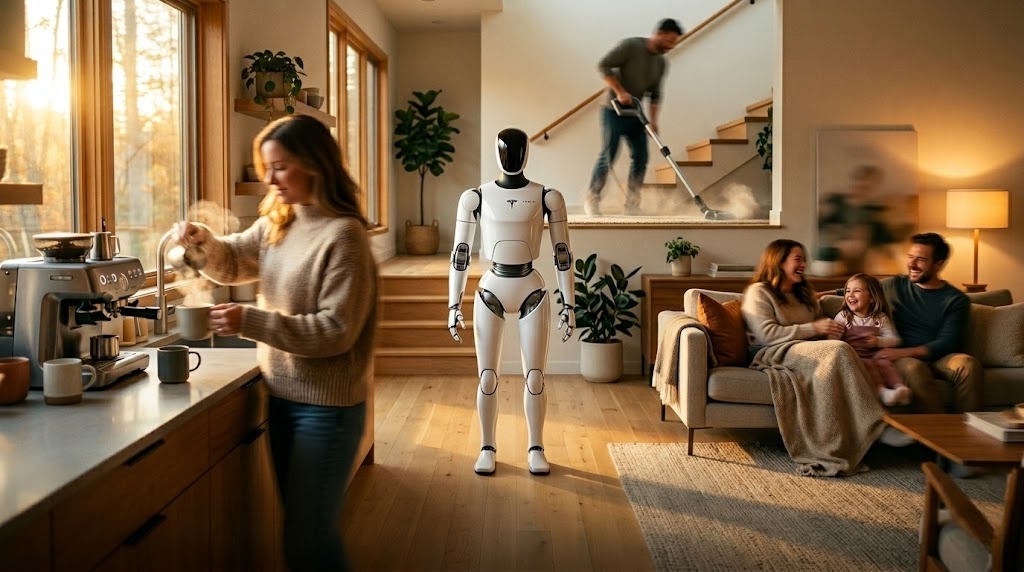
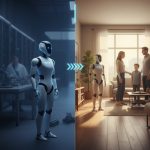
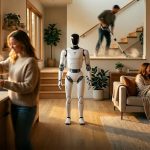
If you are asking what the Optimus Gen 3 can actually do in your house today, the answer is simple: it acts as a fully autonomous household orchestrator. Tesla’s Gen 3 moves beyond lab experiments. It uses the same End-to-End Neural Networks found in FSD v12 and v15. This tech helps the robot move through busy homes and handle chores with its 22-DoF hands. Thanks to Grok AI, it chats naturally with users. It is now a companion that learns, not just a machine that follows commands.
Key Upgrades
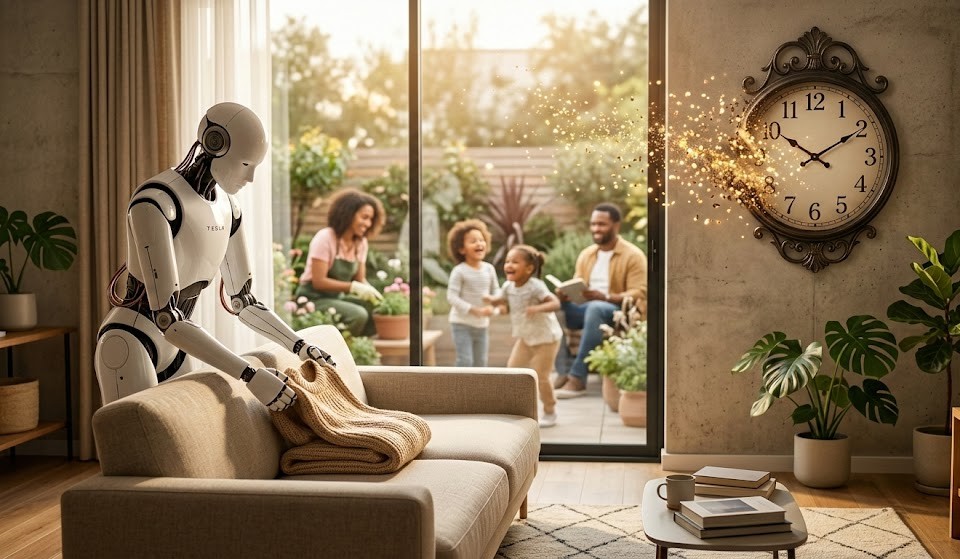
The value of Optimus isn’t just in a clean floor or a folded shirt; it is in the gift of time. By delegating the 2–3 hours of daily “maintenance” tasks to a humanoid, humans are free to focus on work, family, and creativity.
| Time Phase | Primary Role | Key Tasks & Capabilities | Estimated Time Saved |
| Morning (07:00 – 09:00) | The Logistics Facilitator | Preparing breakfast, making beds, sorting laundry, and preparing “launchpad” items (keys/bags). | 45 Minutes |
| Midday (10:00 – 15:00) | The Deep Maintainer | Floor scrubbing, window cleaning, receiving packages, and plant/pet care. | 120 Minutes |
| Evening (17:00 – 22:00) | The Culinary & Social Support | Meal prep (chopping/sorting), dishwashing, decluttering, and smart home synchronization. | 60 Minutes |
| Night (22:00 – 07:00) | The Silent Guardian | Home security patrol, autonomous recharging, and OTA (Over-the-Air) software updates. | Peace of Mind |
The morning hours are usually a chaotic race against the clock. Optimus Gen 3 is designed to mitigate “decision fatigue” by handling the repetitive physical tasks that clutter your morning routine.
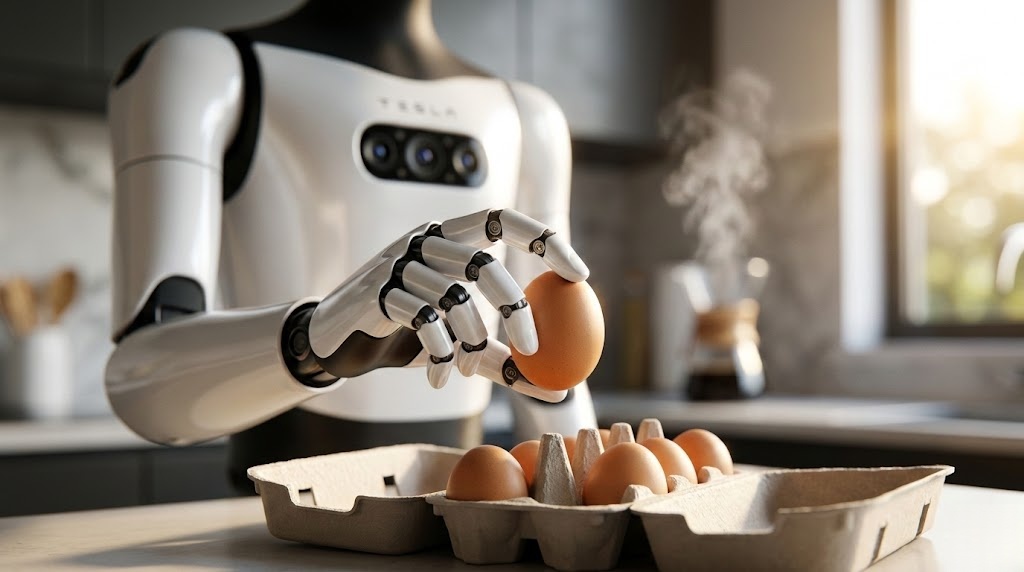
The breakthrough in Gen 3 lies in its tactile sensing fingers. During breakfast, the robot can navigate the kitchen to assist in basic food preparation. It can:
If you have a Tesla, the robot acts as a link. It makes sure your car is unplugged and ready to go. It can put your gym bag or laptop in the trunk or by the door. This works because the car and robot use the same “world model” through the Tesla App.
Your Tesla and your robot work together as a team. The robot can unplug your car or get your gear ready for the day. It might put your gym bag or laptop in the trunk or by the door. This works because both use the same Tesla App system. They share one “world model” to understand and navigate your home.
The most productive hours for Optimus occur when the house is empty. This is when the robot shifts from “helper” to “manager.”
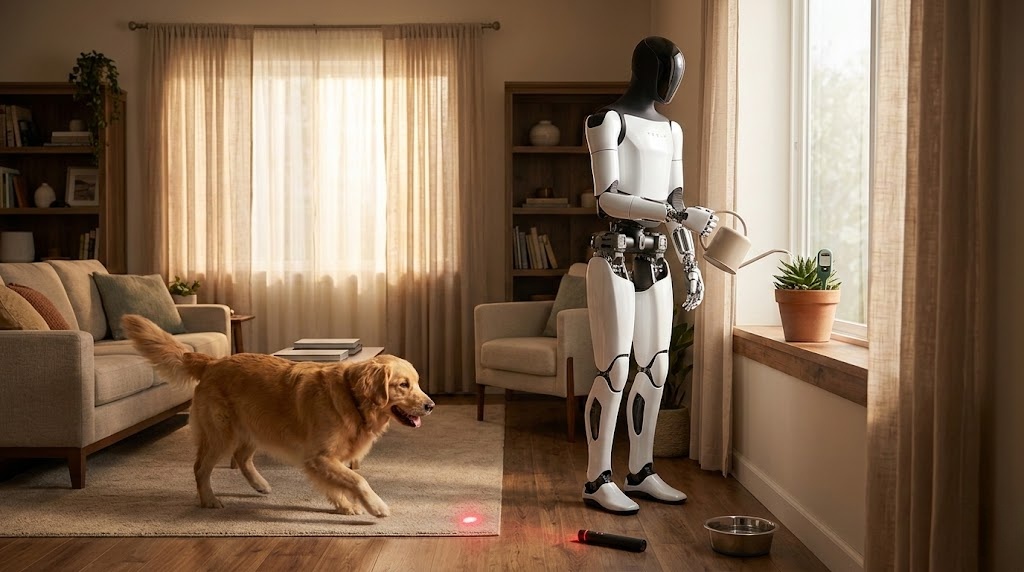
While traditional robot vacuums are limited to floors, Optimus can reach vertical surfaces. Using its bi-pedal locomotion, it can:
According to Tesla’s 2024 Impact Report, the goal for the humanoid fleet is to reduce the “unpaid labor” of housework, which accounts for hours of lost productivity globally.
In 2026, delivery bots are common. Optimus can communicate with these bots or human couriers. The robot walks right to your porch to pick up deliveries. It can even step inside to drop off items in a safe place if you give it the okay. If someone unknown walks up to the house, its wrap-around cameras start filming. You get an instant notification on your mobile device, making the bot a proactive guard on wheels.
People are very excited about the “living system support” in the Gen 3.
The evening is when the “General Purpose” nature of the robot truly shines. It moves away from heavy cleaning into fine-motor assistance and social integration.
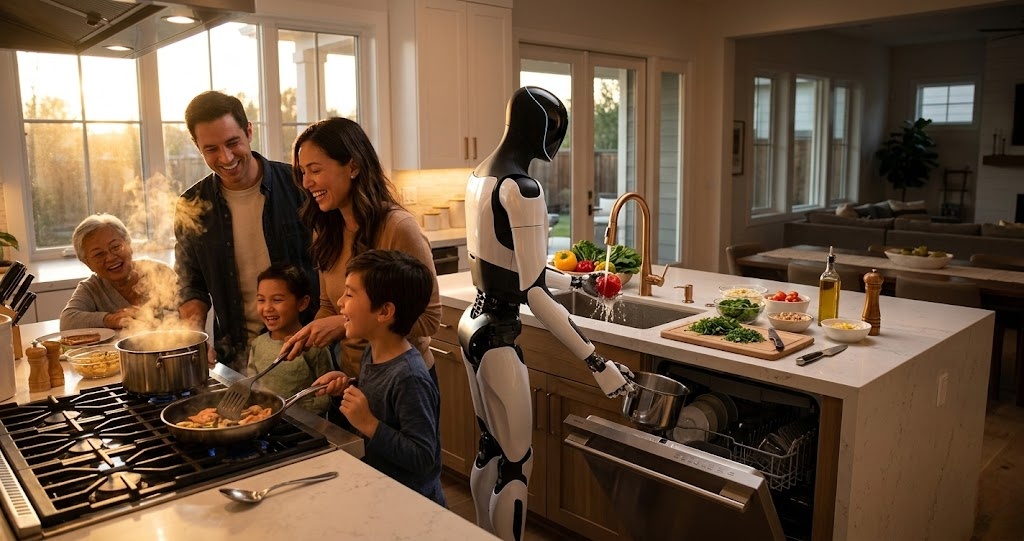
Cooking is often a joy, but the prep work is a chore. Optimus excels at:
The “dreaded” task of loading and unloading the dishwasher is a primary use case. The Gen 3 has very gentle hands that can safely pick up fancy plates and wine glasses. By the time you start your movie, the kitchen is clean and ready for tomorrow morning.
Unlike a static smart speaker, you can talk to Optimus as it moves. Because it is integrated with Grok (X’s AI), you can give complex, multi-step commands:
To see how Optimus Gen 3 does all this in 2026, we should look at the big tech steps made over the past two years.
In earlier versions, the robot had 11 degrees of freedom in its hands. While impressive, this wasn’t enough to handle a zipper or a delicate shirt button. The Gen 3 features a 22-DoF hand architecture with integrated sensors in every fingertip.
| Hardware Component | Function | Advantage |
| Custom Actuators | Motor/Gear systems in joints | Optimized for “torque density,” allowing the bot to lift 20kg but also pick up a needle. |
| FSD Computer | The “Brain” | Processes millions of data points per second to predict human movement and avoid collisions. |
| Tactile Sensors | Pressure-sensitive “skin” | Allows the robot to “feel” if an object is slipping, adjusting its grip in milliseconds. |
| Battery Pack | 2.3 kWh Energy Storage | Provides 8–10 hours of active work time on a single charge. |
Tesla uses a process called Neural Network Training via Human Demonstration. Operators wear VR suits and perform tasks (like folding a shirt). The data is fed into a simulator where the AI practices the task millions of times before it is pushed as a software update to your robot. This means your robot gets “smarter” every month without you having to teach it anything.
A 5’8″ humanoid robot in your home raises valid concerns. Tesla has addressed these through three pillars:
The robot’s joints have force-feedback sensors. If it touches a human, even lightly, it stops movement immediately. It is physically incapable of “overpowering” a door or a person because its torque limits are hard-coded at the firmware level.
One of the biggest fears is a robot “watching” your private life. Tesla has implemented Local Neural Processing. Most of the visual data required for the robot to walk and clean is processed on the robot’s internal FSD chip. Video only goes to the cloud if the user opts-in for “training purposes,” and even then, faces and sensitive areas are automatically blurred by the onboard AI.
Every Optimus comes with multiple ways to deactivate it:
Compared to previous versions, Optimus Gen 2 now walks 30% quicker. It can reach 1.3 mph, around 2.9 mph. This model matches a standard human gait to move through homes safely. It avoids bumping into furniture or bothering people while navigating indoor spaces.
Optimus runs on Tesla’s AI Vision system, just like their cars. It works best with good lighting, but its neural networks can spot objects in the dark. Tesla has not confirmed if it uses infrared sensors for a “patrol mode” yet. However, improving how it moves in low light is a top priority for the team.
As of now, Tesla isn’t sharing the robot’s final cost. Many expect it to work like the Full Self-Driving software. You might get the basic features for a flat fee. More advanced skills or smart software updates could cost extra. These might be sold as a one-time buy or a monthly subscription.
Optimus is designed with autonomous power management. Much like Tesla’s vehicles or advanced robotic vacuums, it monitors its energy levels and can navigate back to a dedicated charging station. Tesla is refining the docking process to ensure the robot can ‘self-plug’ or dock securely to remain ready for 24/7 assistance.
The arrival of the Tesla Bot Optimus Gen 3 in our homes represents a shift from the “Information Age” to the “Automation Age.” We are no longer just using computers to manage our data; we are using embodied AI to manage our physical reality.
Elon Musk once said that a robot capable of any job would eventually be cheaper than a car. He believed this would lead to a future where everyone has enough. By 2026, that big idea is finally moving out of the factory and right into our homes.
Which chore would you delegate to Optimus Gen 3 first? Would you trust it to prep your dinner, or would you start with the laundry? Let us know in the comments below.