Physical Address
304 North Cardinal St.
Dorchester Center, MA 02124
Physical Address
304 North Cardinal St.
Dorchester Center, MA 02124

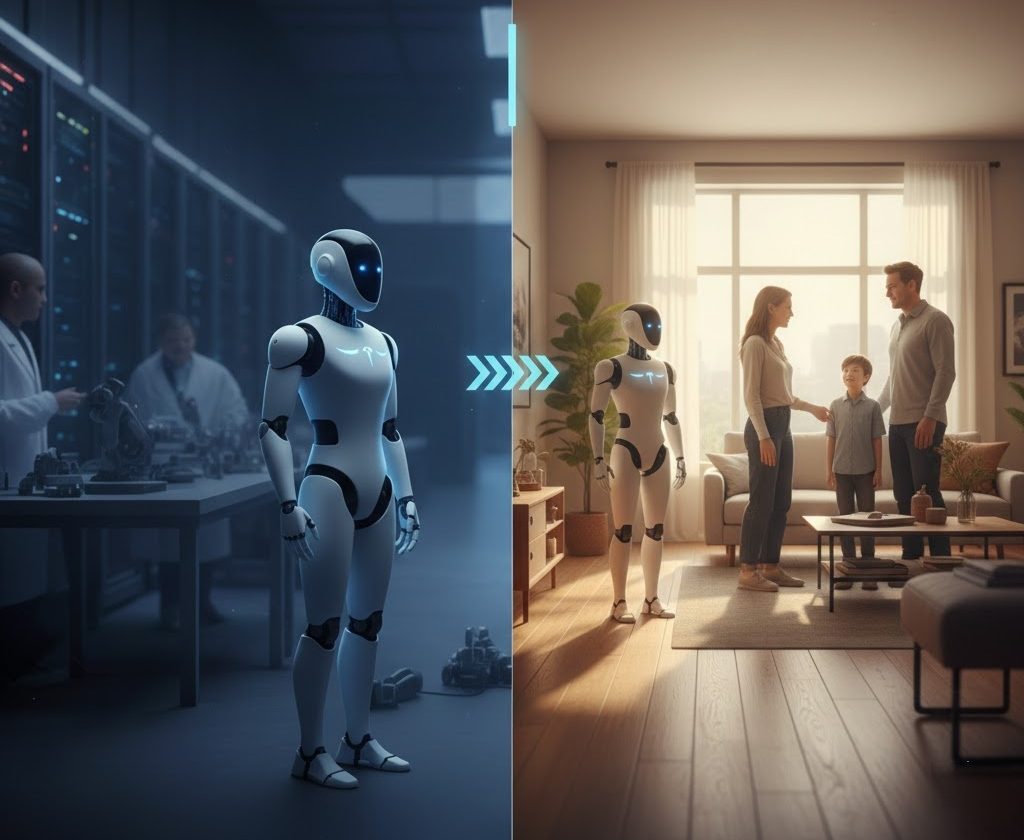
You cannot simply go out and buy a Tesla Optimus robot in early 2026. It is not yet prepared for regular shoppers.
During the World Economic Forum this January, Elon Musk shared that the Gen 3 model is getting closer to being built. However, the first batch of robots will stay inside Tesla’s own factories for work and testing.
The Rollout Schedule
Tesla is following a specific path before these robots enter our homes:
Why the Wait?
Tesla wants to gather plenty of data in real-world settings first. This ensures the robot is safe and smart before it hits the mass market.
Tesla Optimus robots are not available for sale and no official pre-order process on Tesla’s office site. Be careful, as any third-party sites claiming to take orders are likely fake. The current delivery plan focuses on using the robots in Tesla’s own facilities first. Availability for the public will only happen in slow stages over time.
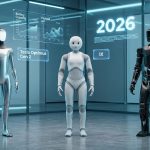
For humanoid robots, Tesla’s Optimus Gen 3 marks a major advancement. Better hardware and more smart AI make it an improvement over earlier models. The robot now has “superhuman” hands featuring 50 total actuators. Each hand uses 22 degrees of freedom to move with incredible precision. The fingertips’ tactile sensors let it to pick up fragile items like eggs. Using end-to-end neural networks, Optimus learns new jobs just by watching. It studies video data to mimic human movements and master complex tasks.
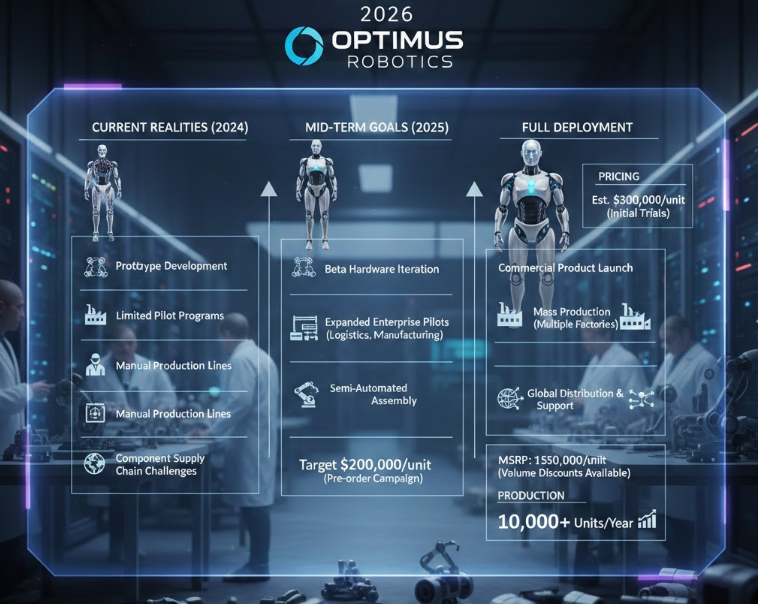
Here are the main technical goals for the Gen 3:
| Feature | Optimus Gen 2 | Optimus Gen 3 (2026) |
| Hand DoF | 11 per hand | 22 per hand + 50 total actuators |
| AI System | Basic vision-based | End-to-end neural networks |
| Tactile Sensing | Limited | Advanced fingertips for precision |
| Autonomy Level | Teleoperated demos | Full autonomous learning |
From demo to duty, Optimus has transitioned beyond scripted performances. Early videos showed it folding shirts or sorting objects, but 2026 models perform practical factory tasks like parts sorting and quality inspection. This shift addresses the autonomy vs. teleoperation controversy:
Early versions needed a person to steer them, but Gen 3 is different. This model focuses on working by itself using Tesla’s self-driving software. The tech from their cars was rebuilt specifically to help the robot navigate.
Tesla’s 2026 goal is to use its own plants as the main test site. The company wants to put 1,000 Optimus bots to work in these shops by December. These machines will pick up real data to make their software smarter and faster. This matches how Tesla builds its cars by testing things internally before selling them to people. Using robots in factories helps fix worker shortages and speeds up production. However, this move means regular customers will have to wait longer to buy one.
The Fremont plant’s shift is a huge deal. The Fremont plant used to make the Model S and X, but now it is the home for Optimus. Assembly should begin by late 2026. The goal is to build one million robots every single year. This change means swapping out old lines for new AI gear. By using its existing car parts network, Tesla can keep costs much lower.
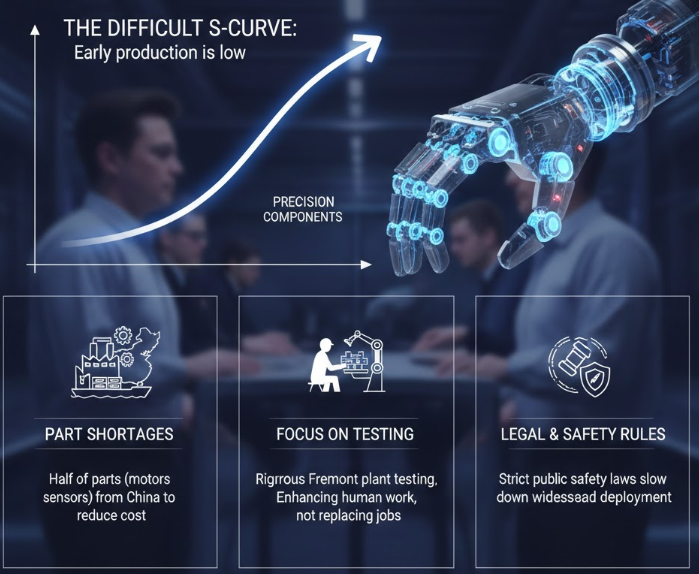
The “difficult S-curve” of scaling up production is a major hurdle. Musk noted that making these robots is hard, so early numbers will stay low. Optimus needs very exact motors and sensors to work right. Because of these building challenges, 2026 will see limited stock. Several things are slowing down how fast they can ship:
| Production Phase | Timeline | Key Focus |
| Internal Deployment | Q1-Q3 2026 | Factory testing, data iteration |
| Limited Partner Sales | Q4 2026 | Select corporations |
| Mass Production Ramp | Late 2026 onward | 1M units/year capacity |
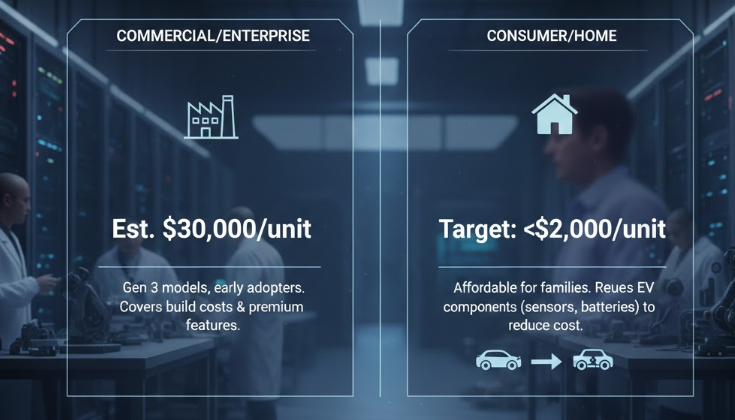
Tesla has different prices for business and home users. For companies, the first Gen 3 models might cost about $30,000. This high price covers the early build costs and top-tier features. The goal is to reduce the home’s price to less than $20,000. Families might afford to have a robot at home because to this. This “used car” cost comparison draws from Tesla’s EV economies: reusing sensors and batteries from vehicles slashes per-unit costs.
Subscription models like “Robots as a Service (RaaS)” are predicted, allowing leasing for $499/month similar to competitors. This could include software updates and maintenance, appealing to households wary of outright purchase.
Breakdown of cost factors:
| Pricing Model | Estimated Cost | Target Audience |
| Enterprise Sale | $30,000+ | Factories, warehouses |
| Consumer Purchase | <$20,000 | Homes by 2027 |
| RaaS Subscription | $499/month | Flexible users |
While Tesla leads in hype, competitors advance rapidly. 1X Technologies’ NEO robot challenges with small-scale home deliveries starting in 2026. Priced at $20,000 or $499/month, NEO handles chores like laundry and offers AI assistance, with pre-orders open now.
Figure’s robot, the Figure 03, is built for home chores like washing dishes. It will start “alpha testing” in real houses during 2026. Digit, a robot from Agility Robotics, is great for moving boxes in the meanwhile. These units are already being used in Toyota plants as of 2026.
Competitive landscape table:
| Competitor | Key Robot | 2026 Progress | Price Range |
| 1X Technologies | NEO | Home deliveries, pre-orders | $20,000 or $499/mo |
| Figure | Figure 03 | Home autonomy testing | Not specified |
| Agility Robotics | Digit | Factory deployments | RaaS model |
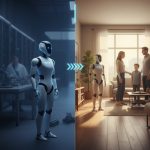
Tesla’s plan for the robot moves from factory tests in 2026 to business sales, then home sales by 2027. Major updates will help it do hard chores like folding laundry or washing the dishes. These new skills come from its upgraded AI system.
Buying one for yourself is still a way off, but the groundwork for everyone to own one is starting now. The 2026 price for the Tesla Optimus Gen 3 is high at first, but it should get much cheaper later. This change could completely flip how we manage our homes.
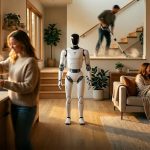
Safety is the primary reason why Tesla is prioritizing factory use before moving “from factory to foyer.” The 2026 Gen 3 model features human-safe design protocols, including limited force output and real-time collision detection powered by the same neural networks found in FSD. However, Elon Musk has noted that the robot must reach “Six Sigma” reliability in navigating unpredictable household obstacles—like a running toddler or a sleeping pet—before it is cleared for unsupervised home use.
New specs for the Gen 3 show a 2.3 kWh high-nickel battery. It runs for about 4 to 8 hours depending on how much work it does. It may be kept on all day for easy tasks like housekeeping or cleaning. The robot charges itself, too. It walks back to its dock when the power gets low. This means it is always ready for its next shift without you having to do anything.