Physical Address
304 North Cardinal St.
Dorchester Center, MA 02124
Physical Address
304 North Cardinal St.
Dorchester Center, MA 02124

Key Points on Tesla Optimus Gen 3
Overview of Tesla Optimus Gen 3 Specs
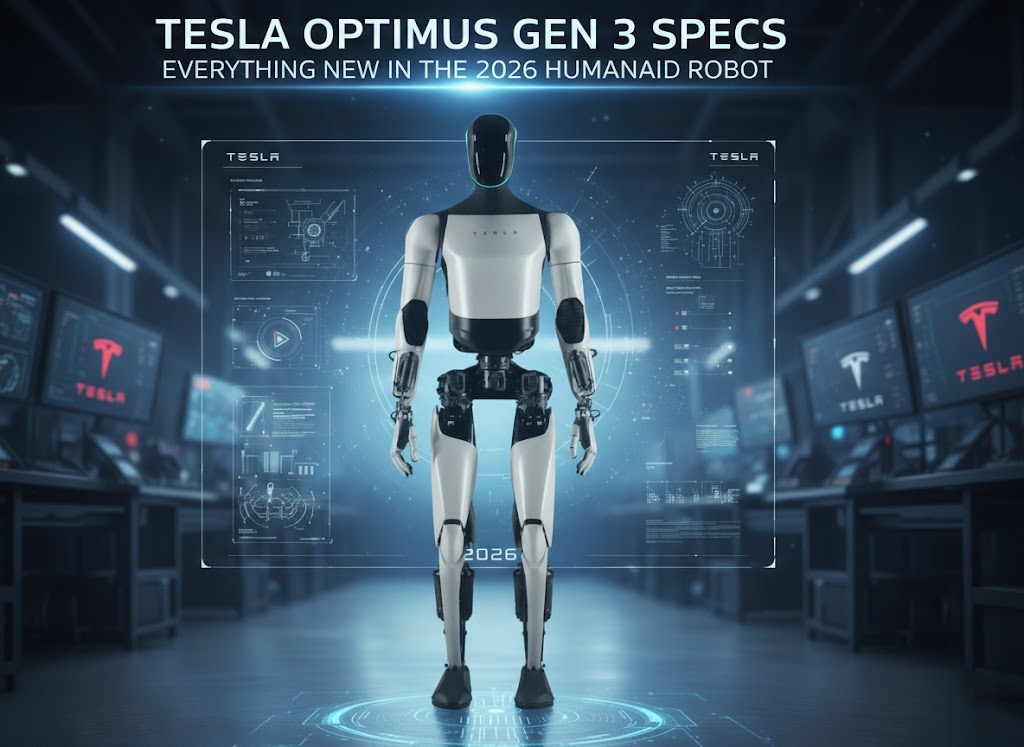
Tesla’s Optimus Gen 3 is a major improvement for human-like robots. With improved components, it improves upon the Gen 2 model. This helps it do tricky jobs like threading needles or moving fragile objects with ease.
Powered by Tesla’s FSD neural nets and AI5 chip, Optimus uses imitation learning from fleet data to master domestic chores. This vision-only system eliminates LiDAR, relying on advanced cameras and sensors for navigation.
| Feature | Specification | Key Upgrades vs. Gen 2 |
| Height | 5’8″ (173 cm) | Standardized human height for tool compatibility |
| Weight | 125 lbs (57 kg) | 22% lighter (Gen 2 was 160 lbs / 73 kg) |
| Walking Speed | 6–7.5 mph (10–12 km/h) | Faster, smoother heel-to-toe gait |
| Hand Dexterity | 22 Degrees of Freedom (DoF) | Double the dexterity; tendon-driven hand system |
| Actuators | Forearm-integrated linear/rotary | Moves weight to the arms for lighter fingertips |
| Compute / Brain | Tesla AI5 Hardware Suite | Same high-power chip as 2026 Tesla vehicles |
| Battery Capacity | 2.3 kWh (52V) | Centrally located in torso; 8+ hour runtime |
| Sensors | 8x High-Res Cameras (Vision-Only) | No LiDAR; utilizes 360° FSD vision |
| Tactile Sensing | High-resolution pressure sensors | Sensitive enough for needle-threading and egg-handling |
| Payload Capacity | 45 lbs (20 kg) | Designed for grocery bags and factory components |
| Deadlift Capacity | ~150 lbs (68 kg) | High-torque planetary roller actuators |
| Price Point | $20,000 – $30,000 | Targeted mass-market pricing |
Market and Availability
Following the January 2026 announcement of a $20 billion CapEx pivot, Tesla has transitioned the Optimus Gen 3 from prototype to initial mass production. While internal deployment across Tesla’s gigafactories will scale to thousands of units throughout 2026 to refine industrial logistics, public sales are officially projected for late 2027.
Tesla’s Optimus Gen 3 is a huge turning point. The company is shifting from making electric cars to leading the way in AI robots. In January 2026, Tesla announced a $20 billion plan to grow this tech. They are even ending Model S and X production at the Fremont factory to make room for robots.
With a target price between $20,000 and $30,000, these robots use the new AI5 hardware. They are built for detail-oriented work, bringing the dream of a home robot much closer. Right now, about 1,000 units are being tested for moving supplies in Tesla’s own factories. This testing helps prepare the robots for everyone else to use soon.
This update doesn’t just boost the robot’s hardware. It adds advanced AI that could help Tesla lead the whole robotics industry. During the Q4 2025 earnings call, Elon Musk even called Optimus “the biggest product ever.” He believe it will change everything from how factories run to how we get help at home. The transition underscores Tesla’s bet on physical AI, amid forecasts that AI robotics could drive significant stock growth.
A major win for Optimus Gen 3 is its new, slim body. It weighs only 57kg now, dropping about 22% of the weight from the 73kg Gen 2. This lighter build helps the robot move quickly and stay agile while staying strong. Tesla applied their car engineering skills to use light materials that improve balance. New sensors in the feet and toes even mimic how humans walk, so it stays steady on uneven floors.
Actually, this means Gen 3 can deal with jobs that need fast moves. It can dodge things in a messy factory or a busy house. Since it weighs less, it also saves power and runs for a longer time. We saw this in the first test models. Being quick and light is key for real-world use. The robot has to handle changes and surprises without any trouble.
At the heart of the Gen 3 is a 2.3 kWh battery tucked into its chest. It is built to keep the robot working all day on one charge for light tasks. The Gen 3 runs on a 2.3 kWh battery pack built into its torso. It handles power very well, using about 100 watts when standing still and up to 500 watts when it’s active. That is a lot like the power draw of a high-end gaming computer. This battery gives the robot enough energy to walk at 5 mph and carry 45 lbs. It is designed to work long shifts in a home or a factory without needing a break.
Tesla’s deep focus on making its own parts makes the robot very reliable. The battery uses the same tech as their cars to keep it safe and help it last for years. While future models will surely get even better, this 2026 version is a great mix of high power and everyday use.
Moving from 11 to 22 degrees of freedon in the hands is a huse win for Gen 3. To give the robot a thinner, morehuman-like hand, Tesla moved the motors to the forearm. This setup lets it do very fine work, like threading aneedle or picking up tiny battery parts. The new cable system also keeps the palms thin, so the robot can gripdelicate items without losing its strength.
The upgrade doubles dexterity, facilitating complex tasks that Gen 2 struggled with. In demos, similar hands have handled eggs gently, showcasing tactile feedback. For home use, this means folding laundry or assembling small items with human-like finesse.
The Gen 3 uses membrane and pressure sensors on its fingertips to give it a “soft touch.” These sensors help the robot handle fragile items without breaking them. They also ensure it can safely interact with pets or people. This technology allows the robot to feel how much grip to use in real time.
In industrial pilots, this has proven useful for sorting delicate components. For consumers, it promises safe, reliable assistance in daily chores.
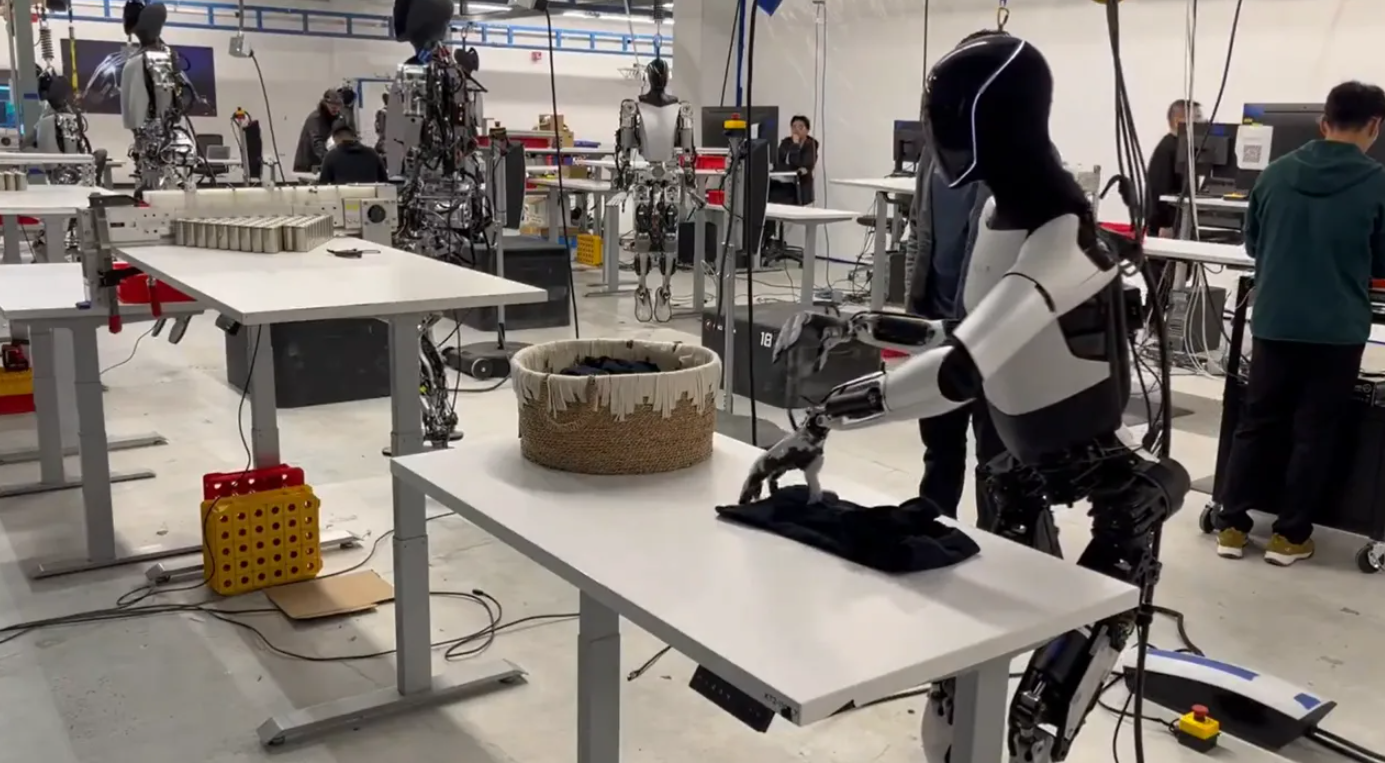
Optimus uses data from Tesla’s huge car fleet to learn by watching. It studies videos of people to master chores like folding laundry. Its neural network handles data in real time, so it learns new tasks on its own. It doesn’t need a human to write code for every single move. This lets the robot adapt fast to different jobs in any home.
This approach, honed from FSD, allows quick learning of domestic routines. Videos show prototypes folding shirts autonomously, hinting at Gen 3’s potential for home integration.
Gen 3 uses eight cameras and computer vision to get around. Tesla skipped using LiDAR to keep costs low and make it easier to build millions of units. The new AI5 chip gives it more processing power. This helps the robot see things in its way and find its own path through messy rooms or garages.
This approach is exactly like how Tesla makes cars. They focus on the software being more important than the actual parts. Factory testing has been a big success so far. The robots are already handling real jobs like moving battery parts and checking product quality. Since factory tests are going well, Tesla plans to start trial runs in actual homes very soon. This step will help the team see if the robots can handle the mess and random surprises of a real house. Testing in these settings is key before the robots finally go on sale to the public.
Right now in early 2026, the Optimus Gen 3 is still for Tesla’s internal use and testing. The company is currently setting up special production lines at the Fremont factory to build these at a larger scale. Elon Musk recently mentioned that while robots are doing some basic tasks in their factories now, they won’t be ready for regular people to buy until at least the end of 2027. This wait allows Tesla to make sure the robots are safe and reliable enough for a home. If you want one, the best bet is to follow Tesla’s news for any early pre-order links or deposit info.
| Method | Breakdown |
| Price Point | Targeted at the $20k–$30k bracket. |
| Vertical Integration | Controlling the supply chain to cut middleman fees. |
| Mass Production | Using high-volume assembly to lower the cost per unit. |
If the Gen 3 is produced in large quantities it will be offered for between $20,000 and $30,000. The actual cost may decrease to $10,000 as production increases. This low price would make Optimus a major threat to other home robots on the market. For now, the focus in 2026 is strictly on using them inside Tesla’s own facilities. Public sales are not expected to start until 2027.
Shaving off unnecessary weight and boosting agility, the Gen 3 weighs just 57kg—a 22% drop from the 73kg Gen 2. Its hands now feature 22 degrees of freedom, doubling the dexterity of the previous 11-DoF model. To handle this complexity, the new AI5 computer provides significantly faster processing power.
| Feature | Gen 2 | Gen 3 | Benefit |
| Weight | 73kg | 57kg | Improved mobility and efficiency |
| Hand Dexterity | 11-DoF | 22-DoF | Better grip and fine motor skills |
| Processor | Standard | AI5 Computer | Rapid real-time decision making |
Not yet. Large-scale building has started, but Tesla is using the first units for its own work. Regular people can likely buy them starting in 2027. This follows the end of their initial factory testing phases.
Optimus is unique because it works with Tesla’s existing tech, like FSD and Superchargers. Other bots like Figure 02 and 1X Neo are also improving quickly. However, Tesla can build millions of units at once. This massive scale helps them keep the price much lower than everyone else.